Most people visit Colorado for the mountains. They hike during the day, sit by the fire at night, and go to bed. What they miss — literally above their heads — is one of the best stargazing experiences in the lower 48.
Skyfall Chalet sits at 10,000 feet in the South Park basin, far from any major city lights. Denver is two hours east. The nearest town, Fairplay, has a population of about 700. The result is dark skies that most Americans haven't experienced since childhood — if ever.
Why South Park Is Special for Stargazing
Three things make this area exceptional for seeing the night sky. First, elevation. At 10,000 feet, you're above a significant portion of the Earth's atmosphere. The air is thinner, drier, and there's less atmospheric interference between you and the stars. Everything appears brighter and sharper.
Second, remoteness. South Park is a 1,000-square-mile basin surrounded by mountain ranges. There are no major cities, no shopping centers, no highway corridors pumping light into the sky. The Bortle scale — which rates dark sky quality from 1 (darkest) to 9 (brightest) — puts this area at roughly a 2 or 3. For context, most suburbs are a 7 or 8.
Third, dry air. Colorado's arid climate means fewer clouds and less moisture in the atmosphere, both of which scatter light and reduce visibility. Clear nights here are genuinely clear.
What You Can See
The Milky Way
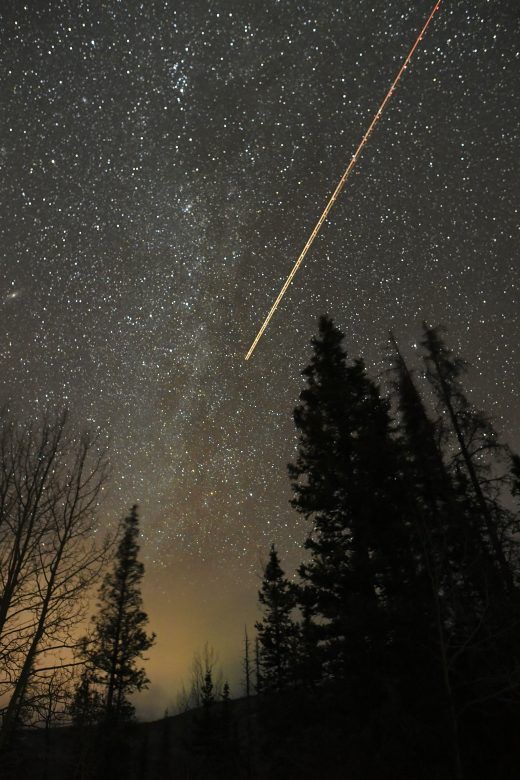
The galactic core is visible with the naked eye from late spring through early fall. From the hot tub at Skyfall, the Milky Way stretches overhead in a bright, detailed band that's impossible to see from any city. Peak visibility is June through August when the core is highest in the sky.
Meteor Showers
Major meteor showers are spectacular at this elevation. The Perseids (mid-August) and Geminids (mid-December) are the two best annual showers. At 10,000 feet with dark skies, you can expect to see 60–100+ meteors per hour during peak nights — far more than the 10–15 visible from a typical city.
Planets & Deep Sky Objects
Jupiter, Saturn, Mars, and Venus are all visible with the naked eye and stunning through even a basic pair of binoculars. On clear nights, you can spot the Andromeda Galaxy, the Orion Nebula, and numerous star clusters without any equipment at all. Bring binoculars and the experience multiplies.
Satellites & the ISS
With so little light pollution, satellite passes are easy to spot — bright points of light moving steadily across the sky. The International Space Station is particularly dramatic, often outshining every star in the sky. Free apps like ISS Detector or Stellarium will tell you exactly when to look up.
Best Times to Stargaze
By Season
Summer (June – August): Best for the Milky Way core. The nights are short but warm enough to sit outside comfortably. Peak season for astrophotography.
Fall (September – November): Longer nights, cooler temps, and excellent transparency. The Milky Way is still visible in early fall. Bring a blanket for the fire pit.
Winter (December – March): The coldest but often the clearest. Winter constellations like Orion are brilliant. The Geminid meteor shower in December is the highlight. The hot tub becomes your observatory — seriously, it's the best way to stargaze in winter.
Spring (April – May): Transition season with improving conditions as summer approaches. The Lyrid meteor shower in late April is a nice preview of summer skies.
By Moon Phase
The moon is the biggest factor in stargazing quality. A full moon washes out everything but the brightest stars. For the best experience, plan your trip around a new moon (when the moon is absent from the night sky) or at least a crescent moon. The difference is dramatic — a new moon night at 10,000 feet is an experience most people never forget.
Even a modern smartphone can capture the Milky Way from here. For best results: use a tripod or rest your phone on a stable surface, enable night mode or a long-exposure app, face south (where the galactic core rises in summer), and give your eyes 20+ minutes to adjust to the dark before deciding on your composition. The fire pit and chalet silhouette make great foreground elements.
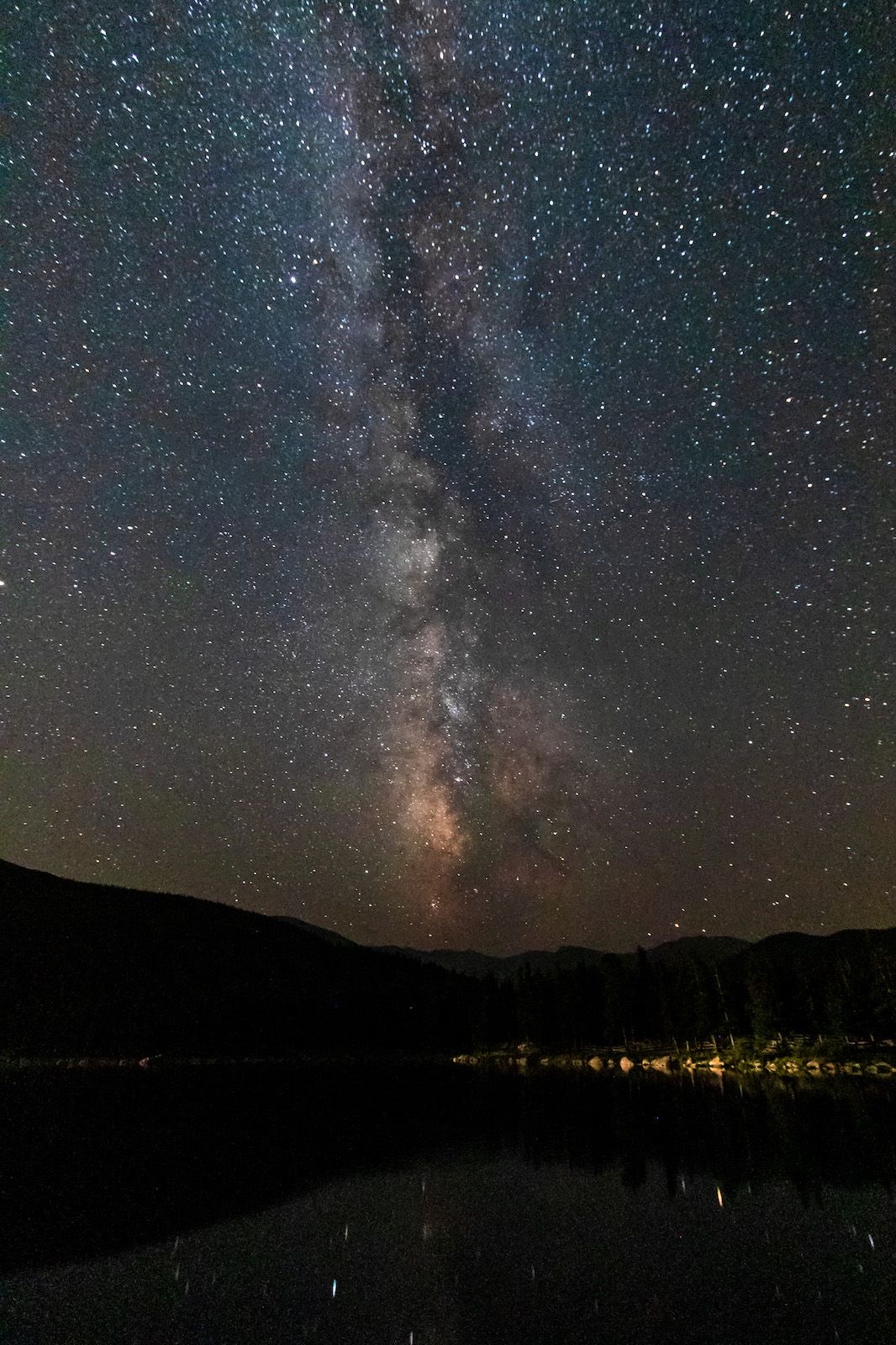
Stargazing from Skyfall Chalet
You don't need to drive anywhere. The chalet's deck, fire pit, and hot tub all face open sky with zero obstructions. Lean back in an Adirondack chair by the fire, soak in the hot tub, or just walk ten steps from the front door. The 360-degree mountain views during the day become 360-degree sky views at night.
Several of our guests have mentioned the night sky as the most memorable part of their stay — including one review that called the skies "insane." They're not wrong.
See the Stars Like Never Before
At 10,000 feet with zero light pollution, Skyfall Chalet is your private observatory. Hot tub, fire pit, and dark skies included.
Check Dates & Save 10–20%